
HitchCon ‘25 Talks

Colleen Glenn
Scottie on the Analyst’s Couch: A View of 1950s Psychology in Vertigo
In addition to being one of the greatest mystery-suspense films of all time, Vertigo offers an insightful glimpse into the concerns and trends regarding mental health in the fifties. In scene two, after his colleague has fallen to his death because of Scottie’s slip on the rooftop, we learn Scottie has been diagnosed with acrophobia, the fear of heights. Yet the film goes on to probe far deeper into Scottie’s condition. After Madeleine’s death, Scottie suffers a complete blackout of memory and becomes catatonic, unable to talk. Institutionalized for his severe condition, the psychiatrist explains he is suffering from “acute melancholia together with a guilt complex.” In act three, Scottie’s obsession with Madeleine becomes even more deviant, as he stalks Judy and forces her to recreate herself as his dead lover. One could say that the entire plot of ‘Vertigo’ rests upon its main character’s fragile psychological state. After all, Scottie’s poor mental health is so apparent—and public—that Elster can not only target him for his nefarious scheme, but can also accurately predict Scottie’s inability to discover the ruse. This paper highlights the many discussions in the film around Scottie’s psychological issues. Earlier versions of the script—as well as letters between Hitchcock and his screenwriters—reveal fascinating attempts to account for the main character’s “acting as a stooge for the girl” (Hitchcock’s words, from a private letter). As my paper will show, Hitchcock was concerned about the extent to which it was necessary to account for Scottie’s phobia, and earlier versions of the script offer much more specific explanations for his debilitating condition. By focusing on the director’s and writers’ attempts to create a realistic portrait of a mentally-disturbed man, this paper will shed light on how neuroses and trauma were understood and treated in the fifties as well as offer us the opportunity to understand Scottie—and Hitchcock’s masterpiece—through a new lens.
About
Colleen Glenn is an Associate Professor at the College of Charleston, where she directs the film studies program and teaches film studies courses. Glenn’s research interests include star studies, masculinity studies, and film history. With Rebecca Bell-Metereau, Glenn edited a collection of essays on movie stars entitled ‘Star Bodies and the Erotics of Suffering’ (Wayne State UP, 2015). Glenn has published articles on Jimmy Stewart, Frank Sinatra, Woody Allen, and Mickey Rourke. She is currently working on a monograph on Jimmy Stewart that deals with his post-WWII films and their relationship to war trauma.

Stella Castelli
Notes on Vertigo: Camp Sensibility & Madness
In her seminal essay “Notes on Camp,” Susan Sontag asserts that “the essence of Camp is its love of the unnatural: of artifice and exaggeration.” Expanding on the sensibility of camp, Sontag’s illustrious and plentiful notes maintain that first and foremost, the aestheticism of camp is a formal category which harbours the ability to elevate the format of a given genre towards the effect of excess. Alfred Hitchcock’s cinematic masterpiece Vertigo makes skilful use of these camp aesthetics when visually staging Scottie’s descent into madness. While the entire motion picture’s visuals are meticulously arranged and colour coded, it is the sequences that engage with his innermost, increasingly fervent meanderings in particular, that take on the colours, figures and shapes of camp sensibility. Deploying a distinct score and dreamlike imagery that challenges the categories of the real and the sane, Scottie’s descent into madness is distinctly set apart from the rest of the film through its campy formatting. Furthermore, taking into consideration that Sontag’s 7th note contends that “[a]ll Camp objects, and persons, contain a large element of artifice” and that “[n]othing in nature can be campy… Camp is still man-made.” The flamboyant visual representation of Scottie’s imagination not only highlights the notion of lunacy but even more compellingly, the fact that the plot of Scottie’s love story and, by extension, Madeleine is thoroughly artificial, man-made and stands as pure mimetic performance. Read through the lens of camp, the cinematic visualization of madness in Vertigo thus exposes its own stylized theatricality in a metatextual gesture of celebratory self-reflexivity.
About
Dr. Stella Castelli is a senior lecturer at the English Department of the University of Zurich. She holds a degree in English and American Literature as well as Theory and History of Photography from the University of Zurich. In 2020, she successfully completed her doctoral dissertation titled Death is Served: American Recipes for Murder - A Serial Compulsion exploring repressions of death and their symptomatic reappearance in contemporary American culture. Her current research engages with mediations of the humorous in literature and media. Further research interests include critical theory, visual culture, the gothic and the aestheticism of camp.

Cassidy Alexander
#hitchcockmask
Los Angeles-based photographer and film editor Cassidy Alexander has been going into public spaces to produce portraits and videos of herself in an Alfred Hitchcock halloween mask, which she has been posting on social media since 2017 (Instagram: @hitchcockmask). What began as childhood fandom grew into a lifelong passion and eventually evolved into a guerrilla-style art project that’s part selfie diary, part homage. Her work weaves together planned choices with moments of serendipity often inspired by Hitchcock’s films and experiences—and the results are alluring, strange, captivating and unsettling. In this presentation, Alexander will tell the story of how a playful yet ultimately reverent experiment took on a life all its own.
About
Cassidy Alexander discovered her love for Alfred Hitchcock at the age of seven. Growing up with a father who sold comics, Vargas pinups, vintage pulp and movie memorabilia, sneaking glimpses into worlds beyond her years became second nature. Cassidy holds a B.A. in Radio/Television Production from the University of Central Florida and an A.S. in Film Production Technology from Valencia Community College—a program Steven Spielberg once praised as “one of the best film schools in the country.” She’s currently a staff video editor at Team Coco, where she edits web series and podcast videos for Conan O’Brien, Rob Lowe, Andy Richter, Ted Danson, J.B. Smoove and others. When she’s not editing—or wearing her Hitchcock mask—Cassidy can be found hanging out with her pup. Lady Reville Hitchcock, doing CrossFit, relaxing or spending time with friends.
H. Marshall Leicester
Hitchcock’s Social Class: The British Silent Years
Everything in Britain is somehow about class, so this paper looks at some of Hitchcock’s silent British movies that foreground class. The characters in these movies don’t display much class consciousness because they mostly understand their lives as individual feelings or generic character relations like romantic melodrama. While they are canny in negotiating the vagaries of classed life they stumble over, the characters do so without quite noticing—but the movies do. And they share a focus on monetization: the profit that haves extract from have-nots. This talk will cite examples from Hitchcock’s early films to show how.
About
Marshall is a Professor Emeritus of Literature, UC Santa Cruz and author, What Ought to Scare You: Affect and Horror in the Hollywood Studio System, 1922-1968 (2025, McFarland).
Pat McFadden
Chadwick and Danvers: Hiring the Help in Hitchcock
n Hitchcock’s films, from The Farmer’s Wife onward, barriers between service and intimacy can be fluid and shallow. Throughout his work, there are butlers, maids, servants and assistants, both benevolent and criminal. Rebecca, The Paradine Case, Under Capricorn and even I Confess utilize domestics as plot devices. In the back-to-back pair of Daphne Du Maurier adaptations, Jamaica Inn has been long hidden in the shadow of Rebecca, disregarded by its creators and audience. But we mustn’t throw away the butler with the bathwater, because in the shadow of Mrs. Danvers is Chadwick, the lifelong manservant to Squire Pengallan. Although Chadwick was an inserted invention of screenwriters Sidney Gilliat, Joan Harrison (and likely his master, Charles Laughton), he is nonetheless informed by the Du Maurier universe, and designed to fit within it. Like Mrs. Danvers, Chadwick is thorough and loyal—and a fierce guardian of secrets and madness. These domestics pave the way for the likes of André Latour, Mrs. Wilson, Milly, Stella and even Leonard in later Hitchcock films. But the roles of servant and master can also equate to crew and director, director and assistant, husband and wife, and even that between the filmmaker and the guardians of the decency code.
About
HitchCon Advisory Board member. Pat McFadden looks at cinema as civilization's most wondrous cave drawings. Growing up in Manhattan, he scoured television listings and theater schedules in an effort to see every Alfred Hitchcock film, and many others that got in the way. After graduating from the High School of Performing Arts, he abandoned drama for film at Emerson College in Boston. His senior student film there, "Equilibrium-ness," earned both a Student Emmy and a regional Student Academy Award. He then transplanted himself to Los Angeles, where he worked several years as an Assistant Film Editor, notably on HBO tele-features. Ill-suited to feast or famine gig-employment, Pat switched to office work, and was an executive assistant at Walt Disney Imagineering for 23 years. Pat is honored to have been a contributing editor and creative consultant for Joel Gunz’s Alfred Hitchcock Geek Facebook Page, and an associate producer for Good Evening: an Alfred Hitchcock Podcast, where he was referred to as “The Man Who Knows Exactly Enough.” He’s author of “Sir Hitch and Uncle Walt: Feud? What Feud?” in The Hitchcockian Quarterly, 2023.

Steven DeRosa
Beneath the Masks: Love, Identity and Class Divide in Hitchcock’s To Catch a Thief
Set amid the sparkle and luxury of the French Riviera, Alfred Hitchcock’s To Catch a Thief cleverly navigates the complex waters of social hierarchies and moral dilemmas. This presentation will examine how the film highlights the dichotomy between characters of varying social standings, especially as love intertwines with crime. Focusing on the relationship between John Robie and Francie Stevens, I will analyze how their love story challenges and critiques the authenticity of social stratifications. Through the changes from the source material made by screenwriter John Michael Hayes—transforming a single copy-cat burglar into a gang of thieves—Hitchcock underscores the realities faced by service workers in a world of opulent vacationers, reflecting broader societal divides.
Central to this exploration is the climactic masquerade ball, an event that gained immense popularity in 18th-century France, particularly within the court Louis XV. These masquerades were characterized by extravagance, opulence, and theatricality, becoming associated with the aristocracy as a means of escaping the rigid social class systems of the time. The masquerade, with its rich historical significance, prompts us to confront the often-hidden truths about society’s values and human connections. By juxtaposing the allure of glamour with the shadowy realities of the characters' lives, Hitchcock crafts a narrative that resonates beyond its seemingly light-hearted premise, inviting us to consider the intricate dance of appearance and reality in a stratified society.
About
HitchCon Advisory Board member. Steven’s approach to his work is rooted in the belief that every story reveals deeper truths about the human condition. His passion lies in uncovering these truths and inspiring others to see the world more reflectively. He is the author of Writing with Hitchcock: The Collaboration of Alfred Hitchcock and John Michael Hayes. Steven has appeared on-screen in the documentaries Viaggio nel Cinema in 3D: Una Storia Vintage and The Master's Touch: Hitchcock's Signature Style; and in featurettes on the 4K/UHD releases of To Catch a Thief and North by Northwest. He teaches cinema studies and screenwriting at Mercy University in Westchester County, New York, where he also coordinates their long-running International Film Festival.

James Chapman
Hitchcock and Theatre
Given his reputation as the ‘master of suspense’ and his oft-expressed preference for ‘pure cinema’, it may seem surprising that Alfred Hitchcock was once regarded as Britain’s foremost director of film adaptations of stage plays. Hitchcock directed eleven feature films based on theatrical properties, seven of them between 1927 and 1932, and in hindsight tended to be disparaging about them. This paper – arising from my new research project exploring Hitchcock’s stage adaptations – argues that the familiar distinction between the ‘theatrical’ and the ’cinematic’ needs to be reconsidered and that Hitchcock’s theatrical adaptations, including films such as Downhill (1927), Blackmail (1929), Number Seventeen (1932), Rope (1948) and Dial M for Murder (1954), not only offer innovative approaches to adaptation but also demonstrate how the theatrical and cinematic modes co-exist within his films.
About
James Chapman is Professor of Film Studies at the University of Leicester and author of Hitchcock and the Spy Film: Authorship, Genre, National Cinema (I. B. Tauris, 2018).
Oisin Queally
From Pure Cinema to Pure Suspense: What Hitchcock Taught Himself
My dissertation looks at Hitchcock’s two versions of The Man Who Knew Too Much and how they show him growing as a filmmaker. For this flash talk I am focusing on one key idea. Hitchcock often said that cinema was a purely visual medium, yet the 1956 Royal Albert Hall sequence proves that sound is every bit as important as the image. The 1934 version builds tension through fast cutting and sharp montage, while the remake stretches time and leans on Bernard Herrmann’s score, silence, and that famous cymbal crash to put the audience through the wringer. Far from contradicting his own philosophy, Hitchcock was really showing us that “pure cinema” is not just what we see, but what we feel. In five minutes I will show how one scene across two films captures Hitchcock’s evolution and why it still shapes the way suspense works on screen today.
About
My name is Oisin Queally and I'm an Irish filmmaker from Dublin and a recent graduate of the BA in Film and Broadcasting at TU Dublin. My dissertation, The Evolution of Craft: Alfred Hitchcock's Dual Versions of The Man Who Knew Too Much, explores how Hitchcock reworked style, structure and character across the 1934 and 1956 films. Alongside academic work, I direct short films and music videos, with projects screening at festivals in Ireland and abroad.
Walter Raubicheck
Something’s R.O.T.ten in the State of South Dakota: Roger Thornhill’s Matchbook Redemption
I have always been fascinated by the R.O.T matchbook that Roger Thornhill, in North by Northwest, displays to Eve Kendall just before he lights her cigarette in the dining car scene. Thornhill calls the word “ROT” his trademark, and upon being questioned by Kendall, he explains that the “O” stands for “nothing.” Later in the film he uses the same matchbook to help rescue Eve from Vandamm’s lair next to Mount Rushmore. I have always assumed that this transformation of the matchbook from a representation of personal emptiness to a strategic tool for thwarting a planned murder (of Eve by Vandamm) symbolized Thornhill’s change from a successful but extremely self-centered businessman to someone who is now willing to risk his own life to save the life of someone else he loves.
I was surprised to discover that critics of the film did not emphasize this (to me) obvious use of the symbol. When I turned to comments by the director and the screenwriter, I was even more dismayed. In an AFI Roundtable discussion in 1972, Hitchcock stated that he assumed Thornhill totally forgot about his mother and his previous wives when he found himself in his uniquely deadly predicament, that such concerns fit a “psychological story,” not a “chase” story. And Ernest Lehman, in 2000, in the journal Creative Screenwriting, claimed that he had no intention to “remake” or “redeem” Thornhill by the end of the picture. What was going on here?
Lehman went on to say that “it happened unconsciously…I think I have little computers in my head that work unconsciously. And I’m glad they do. Who knows where this stuff comes from?” We can accept Lehman’s distinction between the conscious and unconscious aspects of the creative process more readily than Hitchcock’s implication that a “chase” story and a “psychological story” are two different kinds of narrative. Wasn’t one of his greatest achievements that he infused the thriller genre with powerful psychological elements? Could Lehman’s explanation apply to Hitchcock as well? I would like to explore these issues while examining the two “matchbook scenes” and relating them to the overall thematic resonance of the film.
About
HitchCon Advisory Board member. Says Walter Raubicheck, “I love to watch, think about, talk about, and write about movies! And I find the greatest satisfaction doing those things about Hitchcock's films.” Walter is professor of English at Pace University in New York. He is the co-author with Walter Srebnick of Scripting Hitchcock (2011) and co-editor, with Srebnick, of Hitchcock’s Re-released Films: From Rope to Vertigo (1991). More recently, he edited Hitchcock and the Cold War: New Essays on the Espionage Films, 1956-1969. A playwright, he debuted The New Norman, a play about the making of Psycho, at HitchCon ‘22. In addition to his work on Hitchcock, he has published essays on twentieth-century authors such as F. Scott Fitzgerald, T. S. Eliot, Dashiell Hammett and G. K. Chesterton.

Christopher McKittrick
Overlooked Gems: The Curious Incident of Hitchcock's “Incident at a Corner”
Just four and a half years after launching his Alfred Hitchcock Presents television series, Hitchcock directed his only color episode of television for NBC's Startime anthology series. The short-lived Startime program was able to attract top-tier talent to work on the series because it was overseen by Hitchcock's agent and industry power player Lew Wasserman. Hitchcock's episode, “Incident at a Corner,” features his contracted star Vera Miles as a woman who investigates a rumor that has vilified her elderly grandfather throughout their community, and was adapted by award-winning mystery writer Charlotte Armstrong from her novella. “Incident at a Corner” was shot shortly after production wrapped on Psycho but aired just weeks before the release of Hitchcock’s cinematic masterpiece. While Psycho pushed the limits of film censorship, “Incident at a Corner” touches upon many familiar Hitchcock themes, including voyeurism, false accusations, authority, guilt, and family in a compact and compelling 50-minute presentation suitable for primetime audiences, though with a few passing nods to the just-completed Psycho. Hitchcock even utilized much of the crew from the upcoming Psycho for “Incident at a Corner,” including cinematographer John L. Russell, second unit director Hilton A. Green, and set decorator George Milo. As one of Hitchcock's final television productions, “Incident at a Corner” is well worth a second (or even first!) look from Hitchcock aficionados for its compelling portrayal of how a careless and baseless accusation and ensuing gossip can ruin an innocent man’s reputation, as in The Wrong Man.
About
Christopher McKittrick is the author of Vera Miles: The Hitchcock Blonde Who Got Away (University Press of Kentucky, 2025), the first book about the Hollywood star of classic films like The Searchers (1956), The Wrong Man (1956), Psycho (1960) and The Man Who Shot Liberty Valance (1962). He is also the author of books about popular music, including, Howling to the Moonlight on a Hot Summer Night: The Tale of the Stray Cats (Backbeat Books, 2024), Can't Give It Away on Seventh Avenue: The Rolling Stones and New York City (Post Hill Press, 2019), and Somewhere You Feel Free: Tom Petty and Los Angeles (Post Hill Press, 2020). McKittrick has appeared on HLN's How It Really Happened and Fox News Digital and is a regular contributor on podcasts and radio programs concerning film, music and pop culture. In addition to writing, McKittrick has worked in several roles in the entertainment industry, including as the U.S. editor of Creative Screenwriting, the premier screenwriting resource, and as the director of operations of the Visual Effects Society, the global professional honorary society representing visual effects practitioners in the entertainment industry.
Steven Smith
Hitchcock and Herrmann: Their Friendship and Film Scores
Synopsis TBA
About
Steven C. Smith is an Emmy-nominated documentary producer, author and speaker who specializes in Hollywood history and profiles of contemporary filmmakers. A four-time Emmy nominee and sixteen-time Telly Award winner, Steven has produced and written over 200 documentaries. They include The Sound of a City: Julie Andrews Returns to Salzburg; The Lure of the Desert: Martin Scorsese on Lawrence of Arabia; A Place for Us: West Side Story’s Legacy; and Thou Shalt Not: Sex, Sin and Censorship in Pre-Code Hollywood. He is the author of three acclaimed books: Hitchcock and Herrmann: The Friendship & Film Scores That Changed Cinema (Oxford), Music by Max Steiner: The Epic Life of Hollywood’s Most Influential Composer (Oxford), and A Heart at Fire’s Center: The Life and Music of Bernard Herrmann (UC Press). He has twice won the ASCAP Foundation Deems Taylor Award, and the Herrmann biography was the main research source for the Academy Award-nominated documentary Music for the Movies: Bernard Herrmann.

Nick Haeffner
Disenchantment and dissociation in Vertigo and Severance
The poet T.S. Eliot coined the term “dissociation of sensibility” to describe a split between thinking and feeling which is connected with the movement from tradition to modernity. In parallel, Max Weber writes of the “disenchantment of the world,” referring to modernity’s othering of religion, magic and myth as a secular, scientific worldview becomes the official ideology of the Western world. Hitchcock’s films frequently seem to dramatise a split between modern, secular rationalism and pre-modern forms of culture, often via the gothic. In Psycho (1960), for example, the house in which Norman Bates lives is representative of a gothic (pre-modern) world of madness and hysteria. However, it’s the eruption of gothic madness into the modern, pristine and orderly world of the chalet next to the house that makes murder so unexpected and shocking. • • In Vertigo, Scotty, a detective who works with logical deduction and evidence, is in thrall to a powerful illusion: a woman who seems to represent a bygone age of unfathomable mystery, romance, chivalry. Scotty succumbs to madness. Nevertheless, it’s his logical and rational mind that solves the mystery. • • In Apple TV’s Severance, the chief protagonist Mike Scout along with other characters has undergone a surgical procedure called severance, which he hopes will enable part of him to live without the traumatic memory of a presumed dead wife, leaving him split between romantic yearning and intellectual detachment. However, as with Vertigo, Mike (a trained, rational academic) is being manipulated using romantic illusion as the bait. This paper will explore the ways in which Vertigo and Severance can be read using the concepts of dissociation and disenchantment to explore a hitherto neglected aspect of Hitchcock’s work, which echoes down through time into Severance.
About
Nick Haeffner is the author of the monograph Alfred Hitchcock (2005). He has lectured widely and published several articles and essays on Hitchcock’s work, including book chapters in The Blackwell Companion to Crime Fiction (eds. Rzepka and Horsley 2011) and Hitchcock’s Moral Gaze (eds. Barton Palmer, Petty, Sanders 2017). While based for most of his career at the Cass School of Art, London Metropolitan University, where he coordinated critical studies for the faculty, he also taught film studies at Birkbeck College/BFI, University of Westminster and Boston University (British Programmes). He is now retired from his university and has returned to his first love, making music.

Nathan Seckinger
Esoteric Realism in Three Masters of Suspense: Hitchcock, Kubrick and Lynch
This presentation proposes that Alfred Hitchcock, Stanley Kubrick and David Lynch were all engaged in a shared philosophical project: exploring the problem of evil through encoded cosmologies implicit in their work. Through distinctive constructions of narrative, symbol and mise en scène, each director proposed a different manner by which the natural universe might impose moral expectations, suggesting forms of natural justice woven into reality’s fabric without necessary reference to conventional theology or religious doctrine. Employing the language of cinematic realism to grapple with transcendental concerns—agency, causality and moral consequence—their films create an intertextual space that invites reflection on a counterbalance to the problem of evil: a cosmic dimension of hope for the possibility of moral order amidst darkness. This approach encourages a reconsideration of their legacy as metaphysicians of image and sound, whose works probed the ethical architecture of a mysterious and possibly sentient universe.
About
Bio TBA
Joel Gunz
What is Pure Cinema?
Hitchcock often described Pure Cinema in musical terms: “complementary pieces of film put together, like notes of music make a melody.” The definition is simple, but hardly simplistic, and his films show he thought deeply about it. Still, the concept was not his own. By invoking the term, Hitchcock aligned himself with avant-garde filmmakers of the 1920s and 30s who first championed it. Filmmaker and theoretician Germaine Dulac, for instance, voluminously rhapsodized about Pure Cinema, visioning it as “a music of the eye, analogous to music made from the uniting of impalpable sounds in tune or in melodic phrases.” Sound familiar? The self-aware nature of Hitchcock’s camera puts his films in dialogue with the work of avant garde director/thinker Jean Epstein, who described the camera as a “robot-philosopher” engaged in “half-thinking.” As such, Pure Cinema is far more than a form of cinematic grammar; it is a living philosophy that can still inspire fresh creative approaches for filmmakers today.
About
Joel Gunz believes that the search for meaning is among the highest of human pursuits, and it’s this impulse that drives his work. He’s a writer, filmmaker, host of the annual HitchCon International Alfred Hitchcock Conference and publisher of The Hitchcockian Quarterly. His recent publications include “Travels in Hitchcock’s Multiverse” (Re-viewing Hitchcock: New Critical Perspectives, Robert Kapsis, ed., forthcoming 2025) and “A Comparative Look at Hitchcock’s Murder! and Mary” (Hitchcock Annual, 2025, Sidney Gottlieb, ed.). His 2021 film essay Spellbound by L’Amour Fou was selected by several festivals and won Best Short Documentary at the Medusa Film Festival. He also hosts the salon-like MacGuffin Film Club, which features online film screenings followed by meaningful group discussions.
Caroline Young
The Conflict of the Single Woman in Hitchcock’s Films
Hitchcock’s films of the 1950s reflected the societal pressures on women at the time. They faced an identity crisis as they were sold the message that marriage was the only means of fulfilment. In Vertigo, we see the complexity explored through the character of Midge, an independent, working woman who is overlooked by Scottie, and through Judy’s desperate measures to please the man she loves. Her tragedy is her unfulfilled desire to be loved for who she is, rather than the construct of the perfect woman. As single women grappled with their life choices, the two sides of the Hitchcock heroine are in constant turmoil between the ideal woman framed like a portrait, and the earthbound woman, who feels that she isn’t good enough. This talk will further explore how Hitchcock used imagery and costume to depict the two sides of his heroines, transposing the gender roles of Madeleine/Judy in Vertigo, Lisa Fremont in Rear Window, Marion Crane in Psycho and Marnie Edgar in Marnie.
About
Caroline Young is a writer from Edinburgh, Scotland specializing in pop culture and classic cinema. She is the author of Hitchcock’s Heroines (Insight Editions), which explores the legacy of Hitchcock’s leading ladies, their costumes and their relationship with the director. She is also the author of Single & Psycho: How Pop Culture Created the Unstable Single Woman (University of Press of Kentucky), and Crazy Old Ladies: The Story of Hag Horror (Bear Manor Media), which was named as the Daily Mail’s book of the week and nominated for both a Rondo Hatton Award 2023 and the 2022 Richard Wall Memorial Award.
Rebecca McCallum
Looking Out/Listening In: Masculinity in Crisis in Rear Window and The Conversation
Using two masterpieces made by two iconic directors, this presentation will examine the mirroring that exists between L.B. Jefferies, Harry Caul and their respective environments in Alfred Hitchcock’s Rear Window (1954) and Francis Ford Coppola’s The Conversation (1975). From their fixed costumes to their reflective pastimes of looking and listening, to themes covering the violation of privacy, weaponization of information, voyeurism and eavesdropping, Hitchcock and Coppola offer an uncomfortable and brooding look at masculinity in crises. Their final moments, representing a questionable reset for Jeff and a more definite descent into paranoia for Harry, offer multiple interpretations which I will use to assess what remarks these films are making about the destructive nature of surveillance, guilt and obsession.
About
Rebecca is a writer, editor, speaker and creator/host of Talking Hitchcock, a podcast that explores the work and the world of her favourite director. She has written at length about Hitchcock’s films both online and in print for many publications including Fangoria, Grim Journal, Hemlock Books and Moviejawn. A curator of screenings and events across the UK, she shares her passion and perspectives on Hitchcock and has programmed a Hitchcock festival entitled The Apartment Trilogy in addition to hosting anniversary screenings of Rear Window, North by Northwest and speaking at the Wide Screen film festival at the National Science and Media Museum. Previously, she has spoken at HitchCon and co-hosted a programme Hitchcock and Me on BBC Radio. Most recently, she has delivered a lecture on the The Absent, Omnipresent Women of Hitchcock with Final Girls Berlin and she is currently immersed in writing her first Hitchcock focused book.
Follow Rebecca on Instagram @talkinghitchpod and @pendlepumpkin

Elizabeth Bullock
The Bardo of Vertigo: A Tragedy of Interdependent Becoming
Alfred Hitchcock’s Vertigo (1958) is widely regarded as a masterpiece of European-American culture. Nevertheless, its surreal liminality invites a productive reading through the lens of Eastern philosophies, particularly Hinduism and Buddhism. This presentation considers how these religious and philosophical traditions offer new methodological insights into Vertigo’s exploration of desire, identity, and transience.
About
HitchCon Advisory Board member. For Elizabeth Bullock, movies are a “gateway drug” to a life of the mind. She is a cinema, art history and humanities instructor at the City Colleges of Chicago and at Dominican University, River Forest. Bullock earned her Humanities M.A. from the University of Chicago’s Cinema and Media Studies program. Her publications include: “Naughts and Crosses: Marital and Cinematic Gamesmanship in Alfred Hitchcock’s Mr. and Mrs. Smith” in Hitchcock Annual (2021), “Imaginary Women in Hitchcock’s Vertigo and Akerman’s Jeanne Dielman” in Vertigo 65 (forthcoming 2025) edited by Daniel Varndell, and “More Blessed To Give: Tracking the Reception of Alfred Hitchcock's Mr. and Mrs. Smith (1941)” in a forthcoming compilation edited by Robert Kapsis.
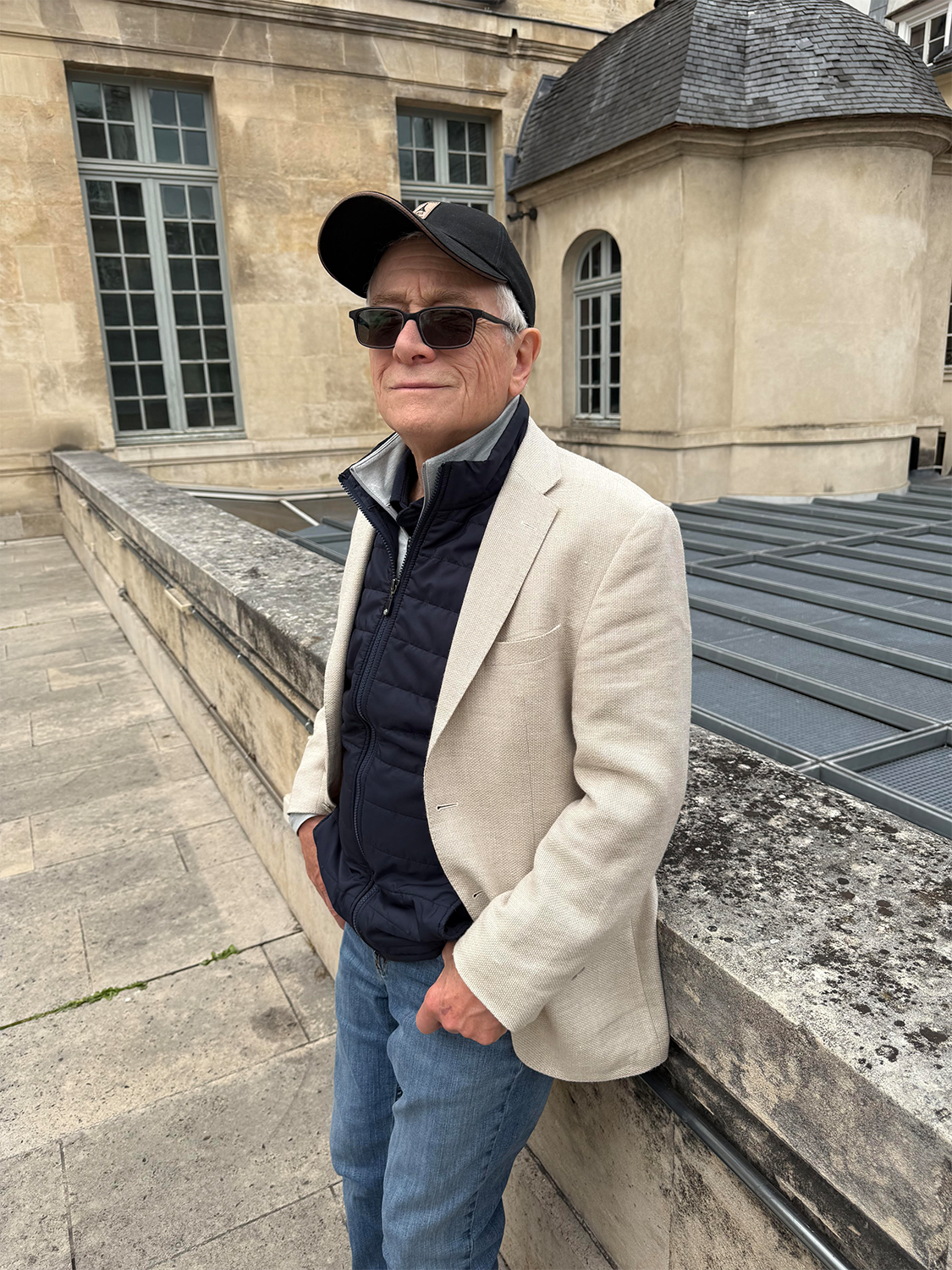
Robert Kapsis
Hitchcock's Worldwide Reception
This panel draws on the new book, edited by Kapsis, Re-Viewing Hitchcock: New Critical Perspectives (February, 2026), which examines Alfred Hitchcock’s prolific career in film and television from a reception perspective. Spanning his oeuvre, the book traces how critical discourse over time—in the United States, Great Britain and worldwide—has shaped the “meaning” of Hitchcock’s works in relation to larger cultural forces. Essays address the uneven fortunes of Hitchcock’s films, from enduring classics such as The 39 Steps, Notorious and Rear Window to once-controversial works like Sabotage, Marnie and The Birds. The volume also highlights Hitchcock’s television output and expands the frame beyond Anglo-American contexts to explore reception across Europe, Asia and Latin America. By foregrounding historical reception, this collection offers a fresh lens on Hitchcock’s career, showing how shifting critical perspectives—from auteurism to feminist and queer film theory—continue to shape our understanding of his legacy.
About Robert E. Kapsis is Professor Emeritus of Sociology and Film Studies at Queens College and the Graduate Center of the City University of New York. He is the author of Hitchcock: The Making of a Reputation (The University of Chicago Press, 1992); the e-book version was published in 2022. Shortly after its release, Kapsis created “Multimedia Hitchcock,” an innovative, interactive software project. Originally designed as a teaching tool for his college courses on Hitchcock, the project expanded into an interactive kiosk shown at MoMA, the Academy of Motion Picture Arts and Sciences, and other museums and nonprofit organizations celebrating the Hitchcock Centennial in 1999. Kapsis is also the editor of Nichols and May: Interviews, Woody Allen: Interviews, Revised and Updated Edition (2016), Jonathan Demme: Interviews, Charles Burnett: Interviews, and Conversations with Steve Martin; and coeditor (with Kathie Coblentz) of Clint Eastwood: Interviews and Woody Allen: Interviews (2006). Kapsis’s work on Hitchcock and “the Hitchcockian” has been featured in many publications and venues, including the New York Times, Oxford University Press’s American National Biography, American Film, The Sociological Quarterly, Hitchcock Annual, Cineaste, The Nation, and the Village Voice. It also influenced the production of documentaries about Hitchcock, including those for the BBC, PBS’s American Masters series, Universal’s Dial H for Hitchcock: The Genius Behind the Showman, and promotional materials for a Hitchcock stamp from the United States Postal Service. Kapsis’s latest book, Re-viewing Hitchcock: New Critical Perspectives, is an anthology conceived and edited by him, sponsored by the BFI, and scheduled for publication by Bloomsbury in February 2026. He is also working on a book about Hitchcock’s posthumous reputation, which Bloomsbury will publish. Leland Faust, his co-author, has been the Chief Executor and Trustee of the Hitchcock Family Trust since 1980.

Tifenn Brisset
Hitchcock Before Cahiers: Postwar Auteurism in L’Écran Français
The most famous and documented part of Hitchcock’s relationship to France is the critical reception by Cahiers du Cinéma during the 1950s. But close attention to L’Écran Français, another film magazine (now forgotten), reveals its importance in the construction of Hitchcock's authorship. This presentation covers the highlights of my essay called "Hitchcock and L'Écran Français, at the Roots of the Politique des Auteurs?", soon to be published in Re-viewing Hitchcock: New Critical Perspectives (Robert Kapsis, ed.). As far as we know, Roger Thérond and Jean-Charles Tacchella were the first ones to take Hitchcock so seriously, as early as 1945. This presentation presents some of the writings in this quite unfairly forgotten journal, which anticipated the positive reception of Hitchcock that we normally associate with the Cahiers critics.
About
Tifenn Brisset has a doctorate in philosophy and is a lecturer in film studies in the Language, Literature, Performing Arts, Information and Communication, Journalism Department at Grenoble Alpes University, France. Her doctoral thesis focused on the links between philosophy and the cinema. Her essays on Hitchcock have appeared in several publications, including The Hitchcock Annual, L’Avant-Scène Cinema, LaFuria Umana, Positif, and Movie: A Journal of Film Criticism (forthcoming).

Dona M. Kercher
Hitchcock in Argentina: Seeing Psycho through Taxidermy
Although Hitchcock’s movies have been screened in Argentina since The Lodger, (1927), their local reception history has received minimal attention. Psycho is a key referent for this analysis. Two contemporary thrillers, Fabián Bielinsky’s The Aura (2005) and Benjamín Naishtat’s Rojo (2018) spotlight the continued significance of Hitchcock to 21st century Argentine cinema. These films mine Psycho’s taxidermy motif, Norman Bates’ hobby, through closed narratives to interpret Argentine economic and political issues. Through this powerful metaphor of predation, these films expose the hidden circulation of funds in the case of Aura, and the extra-judicial killing of the Dirty War in Rojo. Both plots revolve around a “disappeared” victim. Their box office success has been attributed to the presence of transnationally important stars. Although true, this presentation proposes that the reworking of this recognizable Hitchcockian motif played a significant role in these films’ commercial prowess.
About
Dona Kercher is Professor emerita of Spanish and Film at Assumption University, Worcester, MA, where she taught Spanish language and culture, including cinema. She is the author of ‘Latin Hitchcock: How Almodóvar, Amenábar, De la Iglesia, Del Toro and Campanella Became Notorious’ (Wallflower/ Columbia UP, 2015) as well as articles on the filmmakers Manuel Gutiérrez Aragón, Alex de la Iglesia, Pedro Almodóvar, and Santiago Mitre. She has two essays, one on Hitchcock in Spain and another on Hitchcock in Argentina in the forthcoming collection ‘Re-viewing Hitchcock’ (BFI/Bloomsbury, 2025).

Daisuke Miyao
Invisibility and Hypervisibility: Hitchcock in Japan
Alfred Hitchcock was a filmmaker who was obsessed with the sense of vision. In Japan, the visibility and invisibility of Hitchcock and his films was strongly related to geopolitics and technology from the period of the Sino-Japanese War in the 1930s to the advent of television in the 1960s. In the 1930s-40s, as ultranationalist and militarist ideologies gained strength, the number of foreign films was limited and consequently not many Hitchcock films were screened (there were only three). Thus, Hitchcock’s films were mostly invisible while those three released films were highly praised as representative of British national cinema and the thriller genre. During the Cold War from 1945 to the 60s, Hitchcock’s Hollywood films, which had been banned by the Imperial Japanese government, became finally visible but were received ambivalently, often criticized for their sensationalism. The postwar Allied Occupation took the political and economic initiative to reconstruct Japanese society quickly, and their film policy tried not to interfere with that project. Lastly, aided by the rise of television, the figure of Hitchcock, including his massive but charming body, became much more visible than his films (“hypervisible”) and was turned into an icon of commercialism. A Toyota ad in the 1990s was a typical example. Thus, this talk critically traces the discursive history of Hitchcock and his films in Japan, examining how his visibility—and invisibility—reflected broader cultural, political, and media shifts across several decades.
About
Daisuke Miyao is Professor and Hajime Mori Chair in Japanese Language and Literature at the University of California, San Diego. Miyao is the author of Japonisme and the Birth of Cinema (2020), Cinema Is a Cat: A Cat Lover’s Introduction to Film Studies (2019), The Aesthetics of Shadow: Lighting and Japanese Cinema (2013), and Sessue Hayakawa: Silent Cinema and Transnational Stardom (2007). He is also the editor of The Oxford Handbook of Japanese Cinema (2014) and the co-editor of The World of Benshi (2024) with Michael Emerich, and Transnational Cinematography Studies (2017) with Lindsay Coleman and Roberto Schaefer.

Erin Bradfield
“Is it Future or Is it Past?”: Trauma, Repetition and Tragic Heroes in Vertigo and Twin Peaks
Time can be slippery. As Chris Marker notes, the phenomenon of ‘vertigo’ operates on multiple levels in Hitchcock’s film—from the persistent fear of falling to the experience of getting caught up in what he calls “the vertigo of time.” Reality gives way to fantasy and then to nightmare, as Scottie desperately tries to save Madeleine and later attempts to recreate her likeness when he meets Judy. Of course, everything is not as it seems. Inevitably, Scottie’s pursuit of a “second chance” ends tragically after he attempts to brutally refashion Judy in the image of his lost love, Madeleine. Beginning again can be a dicey proposition. Second chances, when intertwined with vertiginous desire, turn into a form of repetition compulsion. In this essay, I explore one thread of the legacy and uptake of Hitchcock’s classic in the work of David Lynch. In particular, I argue that there are striking parallels between the protagonist detectives, Scottie Ferguson in ‘Vertigo’ and Special Agent Dale Cooper in the various iterations of Twin Peaks. These similarities all but guarantee that the characters will be compelled to repeat familiar patterns and play out their obsessions in new ways, leading to an unsettled sense of time and place. I argue that unresolved trauma inspires a form of tragic heroism in both Scottie and Cooper such that they cannot save the various female characters in their orbits—e.g., Madeleine Elster, Judy Barton, Annie Blackburn, and Laura Palmer. In fact, the failure to fully work through their psychological maladies seals their fates and dooms them to repeat and replay rather than to recover and recuperate.
About
Erin Bradfield is Teaching Professor in Philosophy at Santa Clara University where she offers courses in Aesthetics, Ethics, Film, and Culture. Her research focuses on the social and political dimensions of Kantian aesthetics. In particular, she works on issues regarding communication, exclusion, and community formation. Her most recent essays address topics in negative aesthetics including ugliness, disgust, and the sublime. She is currently working on a monograph on David Lynch’s Twin Peaks.

Katy Coakley
There’s Always Someone Watching: The Hidden Hitchcockian Influence in The Skin I Live In and The Substance
Alfred Hitchcock tackled issues of voyeurism and obsession in his films, and contemporary filmmakers have continued to explore these themes. In this presentation, I explore his influence in Pedro Almodóvar’s The Skin I Live In (2011) and Coralie Fargeat’s The Substance (2024). With The Skin I Live In, Dr. Robert Ledgard’s obsessive transformation of Vera Cruz is often compared to Scottie’s obsession with Judy in Vertigo. Both men, coping with losing women they love, begin to control their subjects’ appearances by changing their clothing, hair, and, in Almodóvar’s case, even through cosmetic surgery. The Substance also invokes Hitchcockian voyeurism, specifically drawing similarities to Psycho. For example, Norman Bates’s voyeuristic impulse—most notably his act of spying on Marion through a peephole—is mimicked by Elisabeth Sparkle. However, Fargeat broadens the discussion by concentrating on women’s beauty standards, focusing on Elisabeth’s aging and Sue’s sexualization. Though Hitchcock is not making films anymore, his legacy continues. Contemporary filmmakers like Almodovar and Fargeat connect with Hitchcock’s work by addressing voyeurism through the lens of 21st-century concerns.
About
Katy Coakley is a graduate student studying Digital Media and Storytelling at Loyola University’s School of Communication in Chicago. She is currently employed as a videographer for the university’s Rambler Productions. She graduated with a bachelor’s degree from Dominican University in May 2025. Katy also received the university’s outstanding senior awards in both Film Studies and Digital Journalism. Her capstone, “Masquerading Male Depression in the Screwball Comedies,” highlights director Todd Phillips’s portrayal of masculinity in films such as “Old School" and “The Hangover.” When she is not working, Katy, a passionate cinephile, often spends her free time at the movie theatre.

Elisabeth Karlin
A Sea Change: Is Lifeboat Improving with Age?
On the morning of November 9, 2016 words failed me and so I shared a screenshot out of a movie from 1944. It showed six bedraggled lifeboat survivors, their faces a mix of horror and contempt as it hits them that they have surrendered their fate to a captain who does not have their best interests at heart. Lifeboat may not be a masterpiece or even top-shelf Hitchcock but this unsung film that defied a bundle of cinematic conventions has never seemed so potent as it is right now. Among other things, Lifeboat with its microcosm of humanity reminds us of the fragility of democracy while sneaking in the lesson that if we don’t do our thinking for ourselves, if we don’t strive for allyship and unity, we are hopelessly adrift. When we talk about 100 years of Hitchcock and consider how the old man has aged, we can easily make the case that the lot of his films have withstood the test of time. But for me, Lifeboat in particular, gets better and better. Beyond its forward outlook on sexual, class, and racial politics, what really stands up is how each character transcends the archetype they were fashioned on. They serve as both representative and recognizable individuals—each one a story. Hitchcock remains relevant because his currency is human nature. And in Lifeboat a movie that is free from movie stars, background music, opulent sets and costumes, and even plot, human nature is boiled down to its very essence.
About
HitchCon Advisory Board member. Elisabeth Karlin revels in the art of the movies and the life of the theater. She is an award-winning playwright who sometimes scribbles about film. Her plays have been seen on stages in New York and Los Angeles and have been published by Next Stage Press and Smith and Kraus. Her writing on Alfred Hitchcock includes Beyond the Blonde: The Dynamic Heroines of Hitchcock and Lamb to the Slaughter for the Hitchcock Annual; Things Left Undone: Crimes of Passivity in Vertigo for the Vertigo 65 Conference in Dublin. She has also been a frequent contributor to HitchCon and to The Alfred Hitchcock Geek blog on a wide range of themes inspired by The Master.
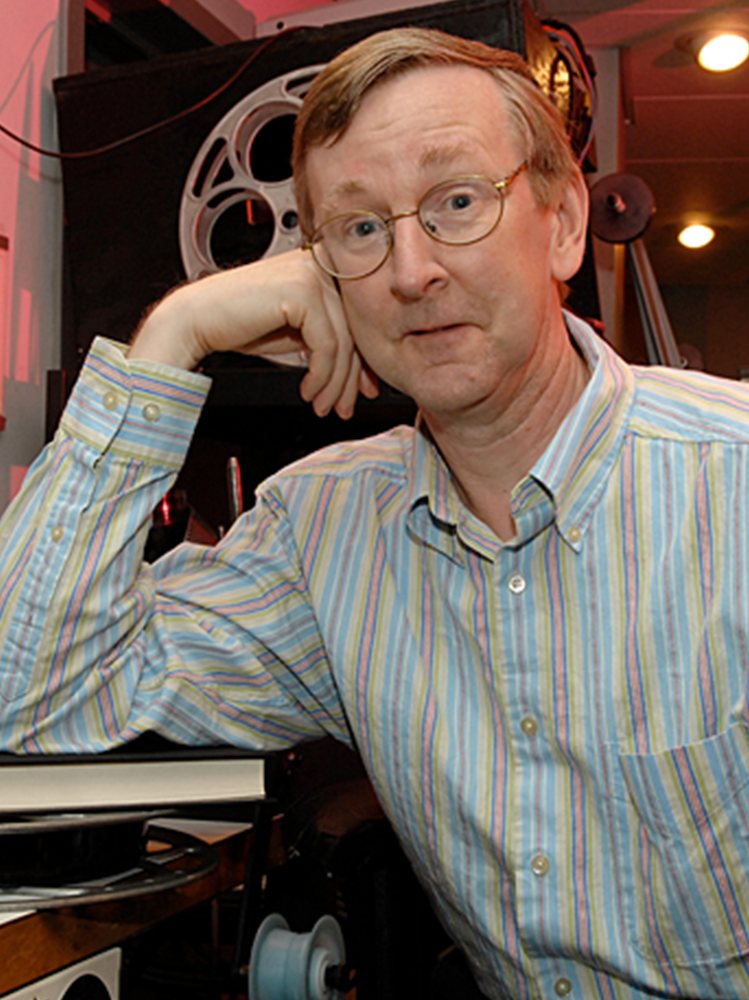
Thomas Leitch
Hitchcock the Entertainer
One of the most delicious ironies of Alfred Hitchcock’s career is years after he achieved success in England and America as a popular entertainer, his defenders in France and those other two countries sought to claim greater artistic value for his work precisely by rescuing him from his status as an entertainer. This presentation seeks to explore Hitchcock’s changing status as an entertainer by focusing on four touchpoints: the different meanings of “entertain,” “entertainer,” and “entertainment”; the different ways Hitchcock sought to make thrillers from The Lodger to Family Plot entertaining; the shifting valences contemporaneous reviewers attached to the idea of Hitchcock as an entertainer; and the evolving relations in the eyes of cinephiles and critics in more established fields between entertainment and art. The presentation, which aims to distil the evolution of Hitchcock the entertainer over the past century, will be illustrated by PowerPoint slides.
About
Thomas Leitch recently retired from the University of Delaware, whose Film Studies program he had directed for thirty years. His extensive writings on Alfred Hitchcock include Find the Director and Other Hitchcock Games (1991), The Encyclopedia of Alfred Hitchcock (2002), A Companion to Alfred Hitchcock (2011), and many essays for The Hitchcock Annual. His most recent books are The Scandal of Adaptation (2023) and Engagements with Adaptation (2025).
Sidney Gottlieb
Reflections on The Pleasure Garden
Alfred Hitchcock’s directorial debut, The Pleasure Garden (1925), celebrates its 100th anniversary this year. Just in time, the long-awaited BFI restoration is set for release on Blu-ray featuring an audio commentary by Sidney Gottlieb. In this talk, Gottlieb reflects on the film’s now visible significance as “the first true Hitchcock movie.”
About
HitchCon Advisory Board member. Sidney Gottlieb is Professor of Communication and Media Studies at Sacred Heart University, Fairfield, Connecticut. He edits The Hitchcock Annual. His work on Hitchcock includes two volumes of Hitchcock on Hitchcock (1995 and 2015), Alfred Hitchcock: Interviews (2003) and, most recently, in collaboration with Donal Martin as co-editor, Haunted by Vertigo: Hitchcock’s Masterpiece Then and Now (2021).
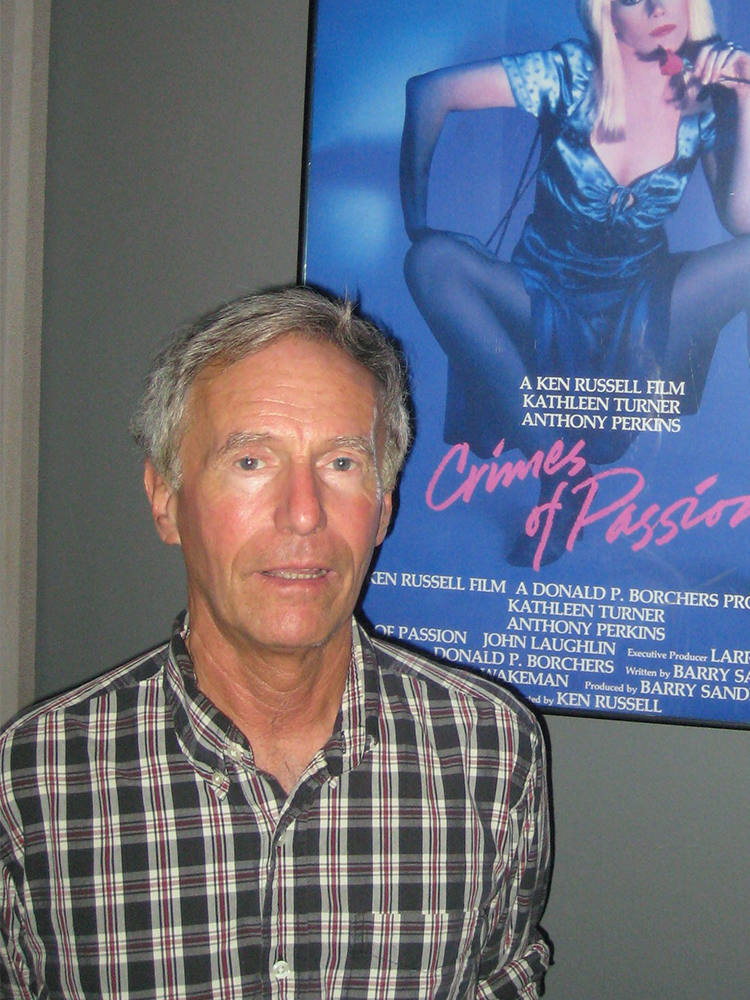
Barry Sandler
My Memories of Working with Kim Novak and Anthony Perkins
Having worked closely and fondly with Tony Perkins on Crimes of Passion, which I wrote and produced, and with Kim Novak on The Mirror Crack’d, I was eager to talk with them about their experiences working with Hitchcock on Psycho and Vertigo—how he directed them, how he guided them into Norman, Madeleine, Carlotta and Judy, and what he was like with them off-camera. What they told me was fascinating, and completely the opposite. I look forward to sharing those memories at HitchCon '25, in conversation with acclaimed author and film scholar Steven DeRosa.
About
With BA and MFA film degrees from UCLA, Barry Sandler has written screenplays for numerous motion pictures, including the transgressive psychosexual cult classic Crimes of Passion (1984), The Mirror Crack’d (1980), Evil Under the Sun (1982), The Duchess and the Dirtwater Fox (1976) and Gable and Lombard (1976). He also wrote Making Love (1982), the first major studio film to present a positive portrayal of LGBTQ men and women.