

Inside HitchCon ’26

Kelly Bulkeley
The Gift of David Lynch’s Dream Logic
David Lynch’s films are often said to display a kind of “dream logic.” What does that phrase mean, and why is it so naturally applied to him? This presentation will consider the idea of a distinctively Lynchian dream logic by bringing his works into conversation with oneiric themes in the cinematic art of Alfred Hitchcock. This will not be a reductive analysis that turns Lynch’s or Hitchcock's art into something else. Rather, by exploring Lynch's dream logic as a genuine logic of dreaming, we can recognize dimensions of his films as they appear within the unconscious of everyone, which I believe was one of his main aesthetic goals. Lynch wanted us to find these incredible powers of dreaming insight within ourselves, and that is the ultimate and enduring gift of his art.

Elizabeth (Beth) Bullock
“This Whole House is a Hotbed of Spies and Saboteurs”: Hitchcockian Farcical Espionage in McGoohan’s The Prisoner
Patrick McGoohan’s television series The Prisoner (1967-68) uses philosophical allegory to expose identity and society as vulnerable to myth’s totalizing influence. Alfred Hitchcock’s oeuvre shares this concern, in which the uncanny—surrealism, sorcery and the macabre—unsettles a world of paranoia and suspicion. This presentation analyzes how these two British storytellers test the possibilities—and limits—of individual freedom under systems of social control. Although shaped by Cold War anxieties, their work still speaks to contemporary audiences, warning against authoritarianism’s slide into totalitarianism and pointing, however faintly, toward lines of flight.

Stella Castelli
Clandestine Catalysts: Twin Peaks as a Tale Enabled by Absent Female Bodies
Twin Peaks opens with the sublime horror of Laura Palmer’s naked corpse, wrapped in clear plastic and washed ashore. Inscribed with tragedy, her absence is a trigger of narratological productivity: it’s the center around which a grief-stricken community revolves and, by extension, around which the entire series begins to develop. The teller of the tale we find in FBI Agent Dale Cooper, the voice of law enforcement and jurisdiction, who arrives in Twin Peaks to solve the case. Through Laura’s absence, he acquires a form of authorial agency as her biographer, piecing together the case and recounting the tragedy. This notion of productive authorship enabled by absent female bodies is reinforced by the figure of the disembodied Diane, the assistant for whom Cooper records his findings. A passive outsider, present only through the proxy of his voice recorder, Diane functions as a blank canvas for Cooper’s narrative. Like Laura, she too serves as a clandestine catalyst for Cooper's agency through her absence rather than her presence. In the original Twin Peaks, then, agency—narratological and diegetic—hinges on absent women who both generate the story and become the surfaces upon which it is told.

Katy Coakley
I Think You’ve Got The Wrong Guy! An Absurdist Approach to Mistaken Identities in North by Northwest and The Big Lebowski
French philosopher Albert Camus’s Myth of Sisyphus describes the Absurd as the division between the human desire for meaning, and the cold, silent universe. Mistaken identity serves as the ultimate catalyst for this realization. This not only applies to Roger Thornhill in North by Northwest, but also to the Dude in the Coen Brothers’ The Big Lebowski. Despite living in different eras and social classes, these two men share various fundamental commonalities. Once they fall victim to arbitrary misfortune, the Dude and Roger are abandoned by the very institutions meant to protect them, forced to flee escalating chaos, and ultimately stripped of the security of home. Their contrasting responses reveal two opposing ways of confronting the Absurd: Roger resists the turmoil imposed by corrupt institutions in an effort to preserve his sanity, whereas the Dude embraces uncertainty, choosing to flow with forces beyond his control rather than struggle against them. In the end, Hitchcock and the Coen brothers both place their characters in absurd, chaotic worlds where survival depends less on moral or strategic certainty than on how they negotiate identity, control and ego.

Steven DeRosa
Scripting the Con: Hitchcock, Lehman, and the Final Wink of Family Plot
In adapting Victor Canning’s 1972 thriller The Rainbird Pattern for his final film, Family Plot, Alfred Hitchcock engaged in a fascinating exercise of cinematic transformation, shifting a dark, cynical novel into a lighthearted black comedy. Under Hitchcock's rationalist lens, the supernatural was systematically replaced by a comedy of deceptions, and doomed hustlers are transformed into a pair of small-time good-natured con artists. Derosa will examine how Lehman and Hitchcock navigated various narrative iterations to arrive at the film's climax and the film’s famous coda: the heroine feigns a genuine psychic trance to guide George to a hidden ransom diamond on the chandelier, only to break the fourth wall and wink at the audience. That gesture transforms a simple fraud into a meta-cinematic masterstroke that became central to the film’s advertising (not to mention that of this very conference 😉). By tracing the development from novel to screen, this presentation illustrates how Hitchcock operated as cinema's ultimate secular magician. Rather than validating genuine spiritualism, Hitchcock used the medium of film itself to perform a final trick, capping a half-century of filmmaking with a reminder that the real wizardry in his universe is the magic of cinema itself.

Richard Gilmore
Hitchcock and the Myth of the Fall
Hitchcock’s films are full of falls—visual, conceptual and psychological. In this talk, Richard Gilmore connects that trope to the Biblical Fall, reading the mythos as one that is not so much about original sin as it is about the need for us to learn a lesson, to provide us with a specific kind of knowledge—one that is difficult to communicate in words. He’ll draw on Stanley Fish’s idea of being “surprised by sin” to explain how Hitchcock’s cinematographic technique conveys this specific kind of knowledge.

Colleen Glenn
La-La Lynch: Mulholland Drive and the Nightmare Factory
Alfred Hitchcock often employed doubles in his suspense films, and David Lynch’s work follows suit prolifically. Beyond split characters and doppelgängers, Lynch imagines the spaces they inhabit as doubled realms. In many of his films, the everyday world coexists with a dark, nightmarish counterpart—an “Upside Down,” to borrow a term from the Duffer Brothers’ Stranger Things—that threatens to open up and swallow victims who unwittingly veer too close to the “portal.” This theme pervades many Lynch films and is particularly potent in the neo-noir Mulholland Drive (2001), which depicts Los Angeles as a split universe. More frighteningly, the two realms are linked in a kind of toxic, abusive relationship, much like the doomed romance between Diane and Rita/Camilla. After a brief look at doublings in Hitchcock, Glenn will explore the divided but inextricably linked spheres of Mulholland Drive and Lynch’s vision of Los Angeles as both “Dream Factory” and American nightmare. Wildly comedic at times, the film nevertheless packs a lasting gut punch, illustrating Lynch’s exquisite talent for conjuring a darkly emotional sense of the sublime “in those Hollywood Hills.”
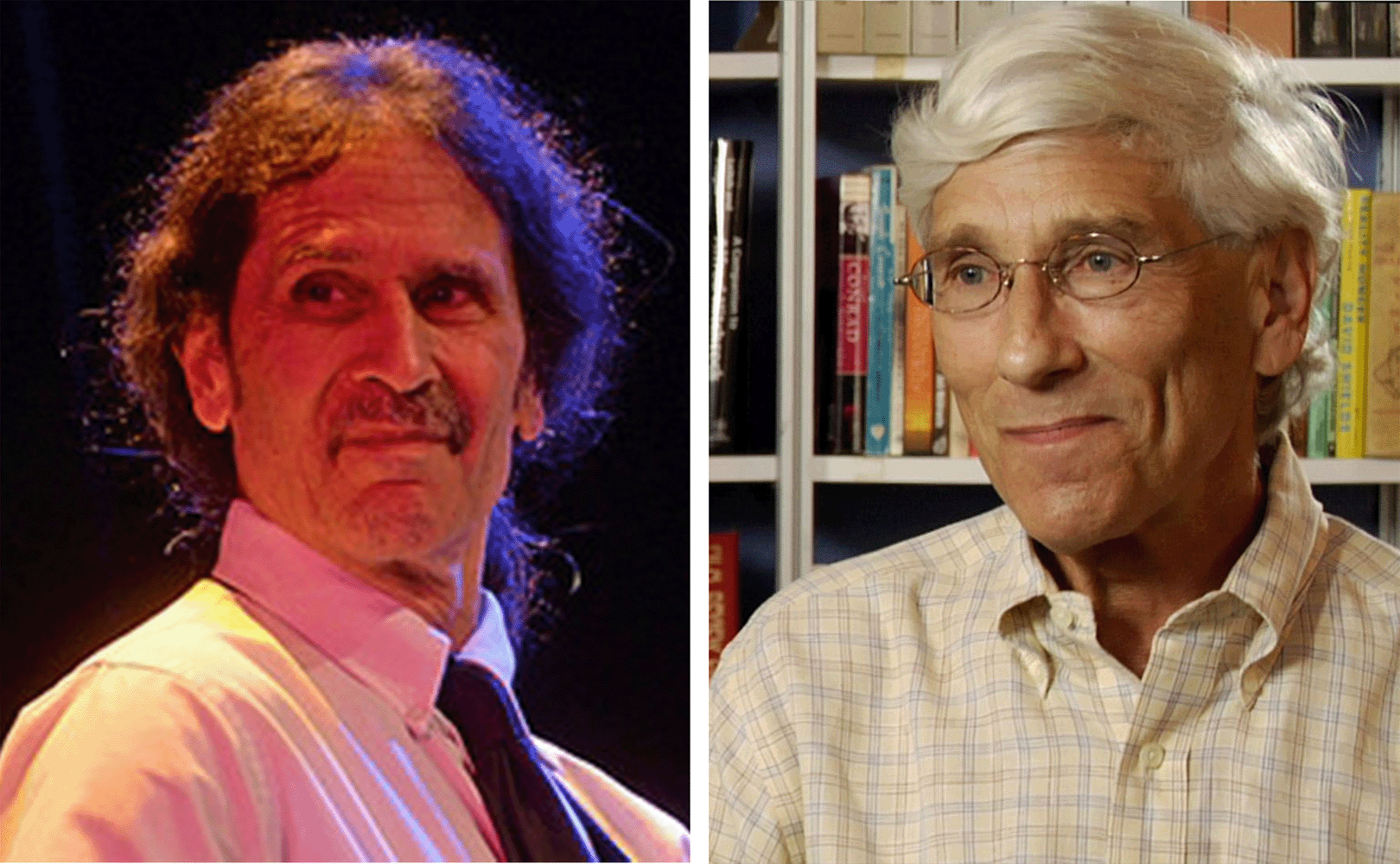
Sidney Gottlieb and David Sterritt
In Conversation: Family Plot
What happens when two longtime Hitchcock scholars sit down with no outline and plenty to talk about? Find out when Sidney Gottlieb and David Sterritt join us for a free-ranging fireside conversation about Hitchcock’s final film Family Plot (1976). Expect close viewing, unexpected connections and the pleasures of hearing two deeply knowledgeable viewers think out loud about one of Hitchcock’s late style.
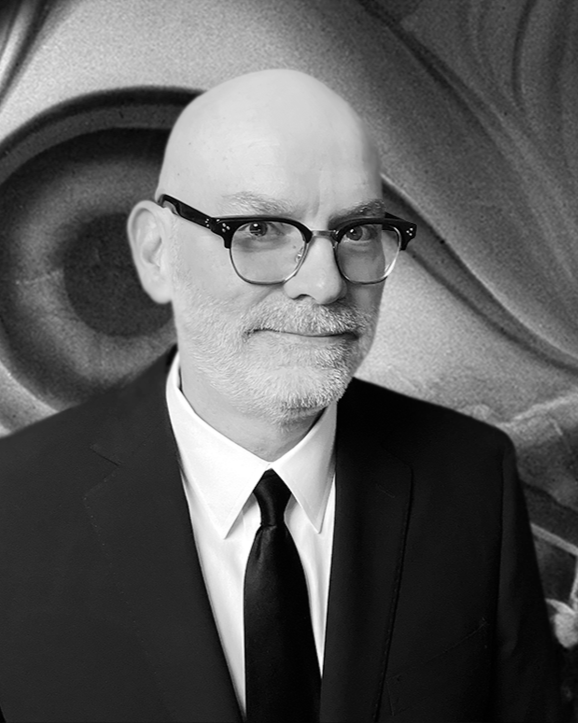
Joel Gunz
Family Plot and the Pursuit of Pure Cinema
Family Plot is Alfred Hitchcock’s sly late-career confession of cinematic magic. Beginning with his own trailer for Family Plot, in which he jokingly calls himself a “master spiritualist,” Gunz will ask what kind of magic the director’s cinema practices. Rather than treating magic as supernatural causation, it defines cinema magic as “the art and science of bringing human consciousness into direct relation with the living image.” From there, his talk moves through Kuleshov, synchronicity, kairos, animism and the problem of personhood to argue that Hitchcockian pure cinema gives images a strange vitality. In Family Plot, with its fake medium, doubles, hidden identities and well-timed coincidences, Hitchcock returns to the deepest mechanics of his art: the charged relation between image and viewer, where meaning appears, as if by magic, at precisely the appointed time.
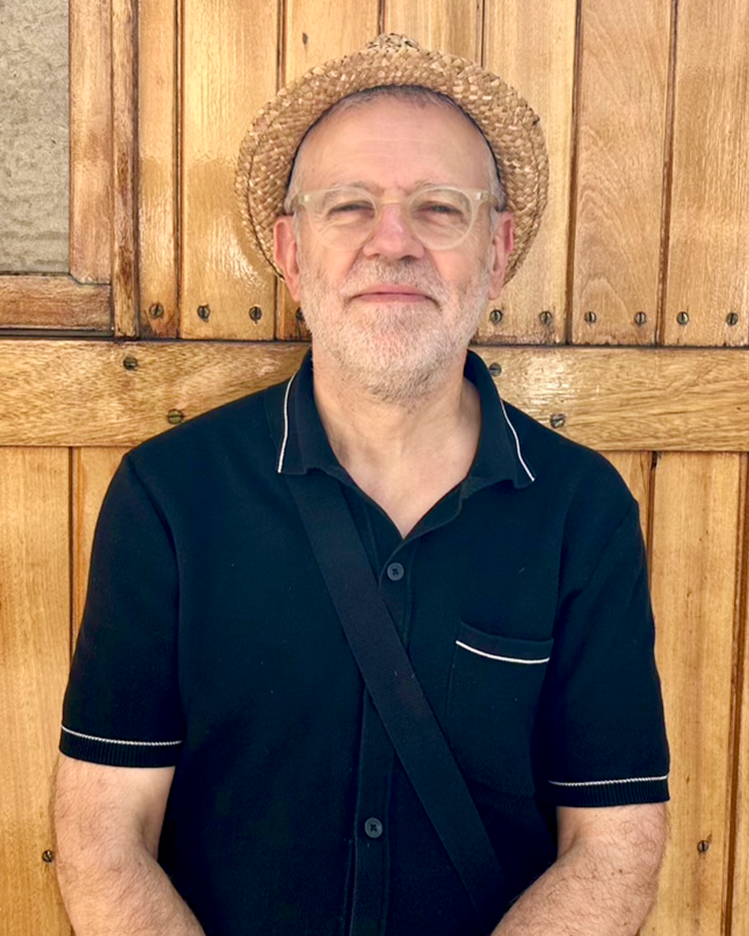
Nick Haeffner
Lost in the Stars: An Anti-auteurist Approach to the Work of David Lynch
David Lynch was universally acclaimed for his originality, but to see his work as the unmediated expression of a uniquely inspired individual would be to be misunderstand it. Like Hitchcock, Lynch depended on—and worked exceptionally well with—creative collaborators. Focusing on Twin Peaks (1990–2017) and Blue Velvet (1986), this presentation considers the contributions of Mark Frost, Angelo Badalamenti, Frederick Elmes and Lynch’s actors as essential elements in what we recognize as “Lynchian.” It also traces the films’ debts to noir, melodrama, horror, mythology, esoteric traditions and, in Blue Velvet, the 1980s “yuppie nightmare” cycle exemplified by After Hours (1985). Even Lynch’s most abstract and seemingly sui generis work complicates the auteurist model. Episode 8 of Twin Peaks: The Return, for example, may look weird on television but parts of it are familiar fare in a contemporary art gallery. By repeatedly referencing and incorporating so much material that is obviously not originated by him, Lynch’s body of work raises questions about whether an auteurist stance may obscure more than it reveals about the work itself.

Thomas Leitch
Haunted Hitchcock
Hitchcock’s final film, Family Plot, features séances that, it is quickly revealed, are led by a fraudulent spiritualist. So it goes with Hitchcock’s feature films, which usually undercut intimations of the supernatural with earthbound explanations. In stark contrast, hauntings are quite prevalent and unresolved on the fringes of the Hitchyverse—in Alfred Hitchcock Presents and The Alfred Hitchcock Hour, in the anthologies for both adults and children, and in advertising and other metatexts. Leitch will consider why this might be so and venture some general conclusions.

Roger Luckhurst
Hitchcock’s Homage: The Fake/Real (or Real/Fake) Psychic in Family Plot
Both British and Hollywood cinema has long had an uneasy relationship with spiritualism and psychic research, often choosing to represent psychics and mediums as cynical hucksters and frauds. The trope of a fraudster getting one true ‘hit’ is a common device too, is one fully on display in Hitchcock’s Family Plot. This talk will put Hitchcock’s use of the trope in context as a form of homage to a device used in both British and American film from the 1920s onwards, and also explores how Family Plot is situated in a notable surge of psychical films in the 1970s.
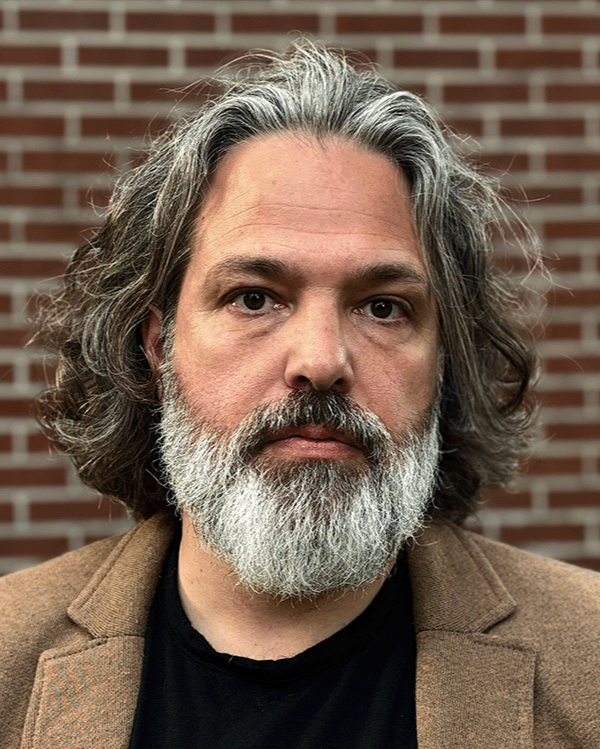
JF Martel
A Dream of Dark and Troubling Things
Days after David Lynch's death, J.F. Martel dreamt of meeting the great filmmaker in an empty high school gymnasium. At one point during the conversation, Lynch imparted a secret about his work that Martel has not stopped considering since. Whether the dead can teach us anything is a question this talk will leave open. What it will argue is that the "secret" can serve as a kind of skeleton key to Lynch's oeuvre, and to cinema in general. It may also tell us something about the nature of reality. Join the co-host of Weird Studies for a discussion of dreams, cinema, life, and the disquieting possibility that the three are made of the same stuff.
Rebecca McCallum
Strangely Familiar-Home Invasion in Shadow of a Doubt
In Shadow of a Doubt, Hitchcock peels back the veneer of perfect family life through a destabilising arrival at the Newton home that will change their lives forever. Attractive and repellent, charming and abhorrent, in Uncle Charlie, we are presented with one of Hitchcock’s most affecting and complex invaders. Applying close readings of the film, areas of focus in this presentation will include the internal and external forces that drive the invasion. Furthermore, by assessing the relationship between the invader and his niece Charlie, this exploration will also extend to the dangers of becoming and being a woman and the conflicting experience of identification and alienation. An evaluation of the film through the lens of home invasion will also seek to uncover and reveal how Uncle Charlie’s assimilation into the home acts as an external representation of a silent threat within the household he disturbs and what Hitchcock is communicating through ownership and occupation of space. Crucial to this analysis will be an interrogation into the ways in which the film might confirm or challenge our understanding of the familiar, the self, of what we call “home” and how spaces of safety and familiarity may contain unwelcome surprises and hidden truths.

Victoria Nelson
Pursuit, Paranoia and the Language of Birds: Victoria Nelson in Conversation with Joel Gunz (Pre-recorded)
Victoria Nelson walks with Joel Gunz into the shadowy web of Hitchcockian storytelling. Placing John Buchan’s The Thirty-Nine Steps and Hitchcock’s like-titled film alongside Geoffrey Household’s prewar novel Rogue Male and Fritz Lang’s film adaptation—Man Hunt—they’ll trace shared currents of pursuit, paranoia and moral ambiguity. They’ll also discuss Nelson’s novel Neighbor George and its Hitchcockian overtones, exploring its uncanny treatment of the language of the birds. Moving between literary history, film and fiction, the session takes a journey into Hitchcock’s world of myth, magic and the macabre.

Mark W. Padilla
“Well, a Boy’s Best Friend is his Mother”: Musings on How Aeschylus and Eugene O’Neill Nurture the Tragic Expression of Psycho
What might Psycho have in common with Greek tragedy? Quite a lot. This talk explores the notion that an important work of Greek tragedy—Aeschylus’ Oresteia—informs Hitchcock’s 1960 thriller. The trilogy of Athenian plays provided a source of motifs, themes and archetypes that helped the filmmakers adapt and deepen Robert Bloch’s very different source novel. A look at the basic storylines and characters of the Oresteia invites some striking comparisons with Psycho: unexpected death in a bathing space, matricide, character parallels, comparable settings and evolving cultural and political relationships. Eugene O’Neill’s Mourning Becomes Electra—itself an overt reworking of the Oresteia—and its 1947 film adaptation offer a further lens for comparison. Greek myth enjoyed renewed popularity on film in the late 1950s and early 1960s, placing Psycho within a broader midcentury modernity’s fascination with ancient classics.
Oisin Queally
The Island That Likes to Be Visited: Hitchcock, Myth and the Phantom Place
In the early 1960s, Alfred Hitchcock returned to an idea that had fascinated him for decades: a film adaptation of J. M. Barrie’s Mary Rose, a strange and haunting story of a woman who disappears onto a remote island and returns unchanged while the world around her has aged. Hitchcock referred to the island as “The Island That Likes to be Visited,” and developed the project as far as a screenplay and detailed visual concepts before it was ultimately abandoned. This presentation explores Hitchcock’s fascination with Barrie’s island and its place within his wider interest in haunted landscapes, unstable realities and the relationship between physical space and psychological experience. It will also consider the folklore and mythology of phantom islands, from Scottish and Irish traditions to the mysterious islands that appeared on early maps, asking how an imaginary place can acquire a life of its own. The talk will draw on the surviving screenplay, Hitchcock’s own discussions of the project, and my experience developing a feature screenplay inspired by the same idea.
Caroline Young
The Other Vanishing Lady: Monograms and Magic in The Lady Vanishes
To make an older woman in an oatmeal tweed suit vanish on a packed sleeper train takes a great deal of manipulation and magic. In The Lady Vanishes (1938), Hitchcock uses a series of seemingly mystical devices to create an atmosphere of illusion around Miss Froy’s disappearance. There’s the pair of glasses found in one of the carriages, a name written on the window in steam, and even a magician’s tricks of the trade, which are used to comic effect during the fight sequence. But there is another vanishing lady in the story, one who is being gaslit by the other passengers. While Miss Froy’s name evaporates, Iris Henderson (Margaret Lockwood) tries to keep herself grounded with her initials ‘IH’, monogrammed on her clothing. Monograms are a recurring motif in Hitchcock’s films. In Rebecca, Rope and Shadow of a Doubt, initials stitched on clothing or engraved on jewellery give a voice to other “vanished” characters. Yet Iris’s initials also have a double meaning. They reflect her anxieties around her impending marriage, when her maiden name will be erased and she will lose her autonomy. So, in this sense, is Iris the true “vanishing lady” of the film?